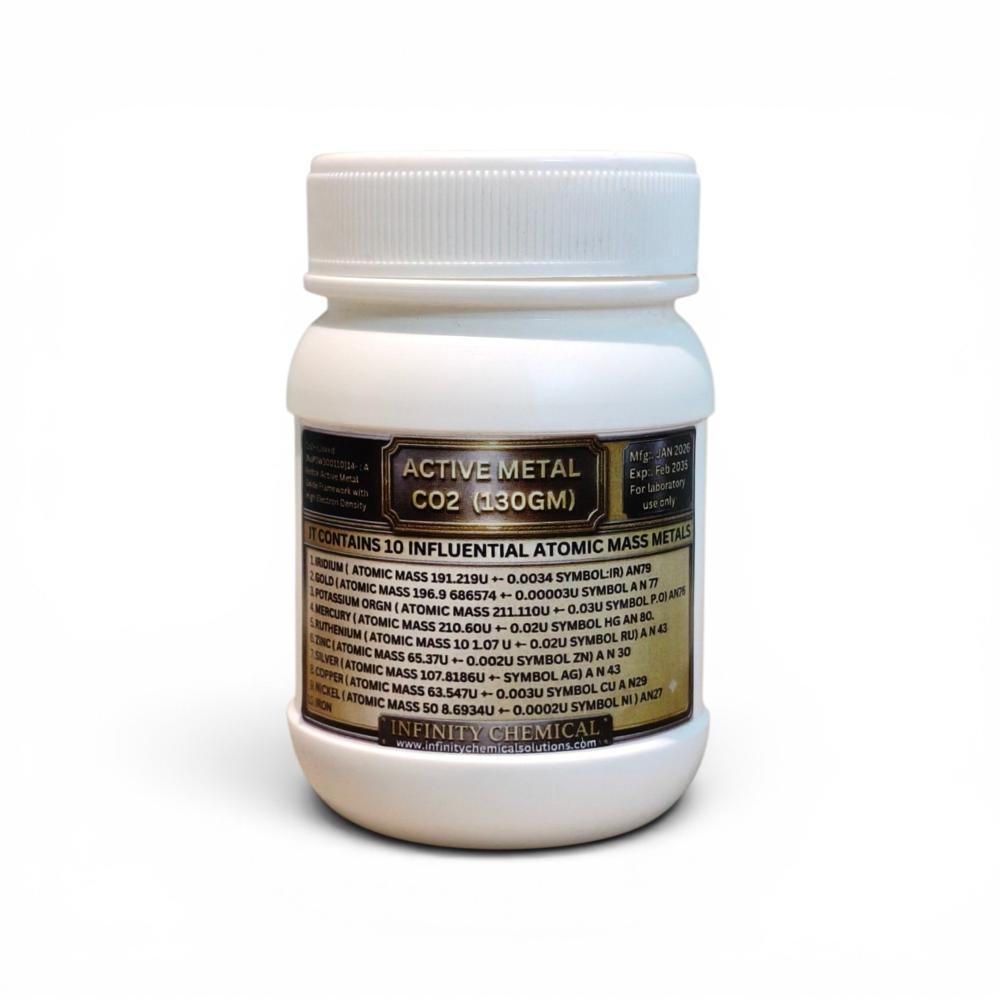
Active metal CO2 Specification
- Storage Instructions
- Store safely, separate incompatibles, control temperature, and label clearly.
- Boiling point
- 78.46 C (at 1 atm, sublimation point)
- Molecular Formula
- ACTIVE METAL CO2
- Melting Point
- 78.5 C (sublimes directly to gas)
- Molecular Weight
- 44.01 g/mol GSM (gm/2)
- Usage
- Carbonation in beverages - Fire extinguishers - Refrigerant (dry ice) - Shielding gas in welding - Medical use (respiratory stimulation) - Chemical feedstock
- Density
- ~1.977 g/L at 0 C (gas); ~1.0 g/cm (liquid under pressure) Gram per cubic meter (g/m3)
- Ph Level
- Acidic when dissolved in water (forms carbonic acid, pH ~4.5)
- Packaging Type
- Plastic bottle
- Grade
- Industrial, food, medical, and laboratory grades available
- Type
- Technology Lab Chemicals
- Application
- Carbonation in beverages - Fire extinguishers - Refrigerant (dry ice) - Shielding gas in welding - Medical use (respiratory stimulation) - Chemical feedstock
Active metal CO2 Trade Information
- Minimum Order Quantity
- 1 Piece
- Payment Terms
- Cash on Delivery (COD), Cash Advance (CA), Cash in Advance (CID), Cheque, Western Union, Paypal, Cash Against Delivery (CAD)
- Supply Ability
- 1000 Pieces Per Year
- Sample Policy
- Contact us for information regarding our sample policy
- Packaging Details
- High-quality chemical products available in multiple grades (industrial, medicine, and chemical) with purity up to 99.99%. Packaged securely in drums, cans, bottles, or bags to ensure safe handling and quick delivery worldwide.
- Main Export Market(s)
- Asia, Australia, Central America, North America, South America, Eastern Europe, Western Europe, Middle East, Africa
- Main Domestic Market
- All India
- Certifications
- Certified products guarantee reliability, safety, and compliance with industry regulations
Active metal CO2 About
Carbon dioxide is a naturally occurring greenhouse gas essential for photosynthesis. It is widely used in industry for carbonation, refrigeration (dry ice), welding, and medical purposes. Though non-flammable, it can displace oxygen in confined spaces, posing an asphyxiation hazard.






 Send Inquiry
 Get Latest Price

